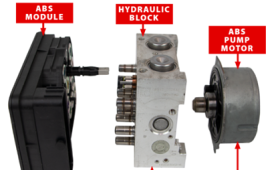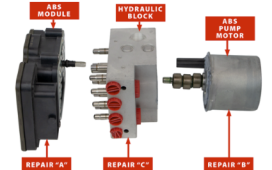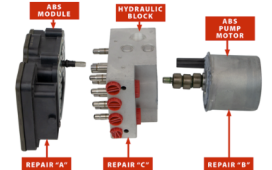
Modern Anti-lock Braking Systems (ABS) are built around precise hydraulic control, allowing a vehicle to maintain traction and steering during hard braking. At the center of this system is the hydraulic block & pump; Two components that work together to regulate brake pressure in real time.
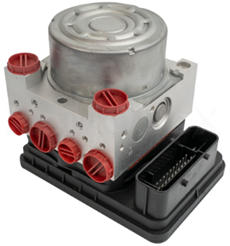
The hydraulic block is a network of internal channels and electronically controlled valves. These valves rapidly adjust brake fluid pressure to each wheel based on input from the ABS control module. When wheel lock-up is detected, the block momentarily reduces and reapplies pressure, preventing skidding. Supporting this process is the pump, which restores hydraulic pressure after it has been released. Together, they allow the system to cycle pressure multiple times per second, ensuring consistent braking performance and control.
What Goes Wrong and the Symptoms of a Faulty Hydraulic Block & Pump
Despite their durability, hydraulic blocks and pumps operate under constant pressure, heat, and contamination exposure. Over time, several types of failures can develop.
Internally, valves within the hydraulic block can stick or become restricted due to debris or corrosion. This disrupts the precise modulation of brake pressure. The pump motor itself can wear out or fail electrically, preventing the system from rebuilding pressure during ABS events. In some cases, internal seals degrade, leading to pressure loss or uneven braking behavior.
These failures often present themselves through noticeable symptoms. The most common is an illuminated ABS warning light, sometimes accompanied by traction control or stability control warnings. Drivers may also experience a loss of ABS function, meaning the wheels can lock up under hard braking. In more severe cases, there may be a soft or inconsistent brake pedal, increased stopping distances, or unusual noises from the ABS unit during operation. Diagnostic trouble codes related to pump motor performance, pressure issues, or valve malfunctions are also common indicators.
If your ABS hydraulic block & pump is failing, you may notice:
- Spongey, soft brake pedal
- No brake fluid flow to one of the calipers
- Brakes are continuously applied
- Red-hot brakes
- Brakes can’t be bled
- Locked brakes (pressure is released when one of the bleeders is open)
- ABS pump motor performance codes
- Pump motor will run only when tapped
- Noisy pump motor operation
- Blown main fuse for the pump motor
A Longstanding Gap in Repair Options
Historically, options for addressing hydraulic block and pump failures have been limited. Unlike electronic modules, which are often repairable, the hydraulic block portion of the ABS assembly has typically been treated as non-serviceable. This has left vehicle owners and repair facilities with a difficult choice: replace the entire ABS unit at significant cost or attempt to source a used component with unknown reliability.
Recognizing this gap, XeMODeX has invested heavily in developing reliable repair and remanufacturing solutions for hydraulic blocks and pumps. This effort has required extensive research, custom tooling, and specialized processes to address both mechanical and hydraulic failure points. The result is a growing range of high-success-rate solutions designed to restore proper function without the need for full unit replacement.
We’ve been testing and repairing ABS modules for years, but the hydraulic block portion required a completely different setup.
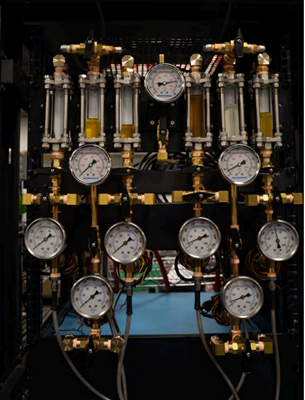
We designed a custom hydraulic flow tester to ensure that all internal passages and valves are working properly within the ABS hydraulic block. The pressure generated by the ABS pump is also tested, as well as it’s current draw.
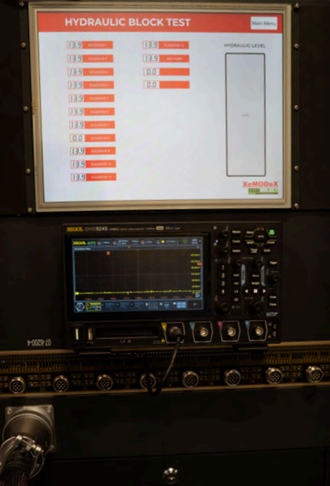
Depending on the test sequence, our tester can activate a single valve or several valves at once, along with the ABS pump. This way the pressure can be fully monitored.
Our tester can easily detect problems with:
- Brake fluid flow to any of the wheels
- Defective valves that prevent the brake calipers from releasing
- “Spongy” brake pedal
The Result of Our Hard Work
It is now possible to repair nearly all hydraulic blocks and pumps, restoring functionality without replacing the entire assembly or gambling on a used hydraulic block & pump. Outside of pressure sensor codes (which are integrated in the block and not accessible), the most common issues (sticking valves, contamination, pump motor failures) can now be repaired through our proven repair processes.
In addition to repair services, XeMODeX is introducing a growing lineup of fully remanufactured hydraulic block and pump units available on a stock exchange basis. This approach minimizes vehicle downtime by allowing customers to receive a ready-to-install unit without waiting for their original component to be rebuilt.
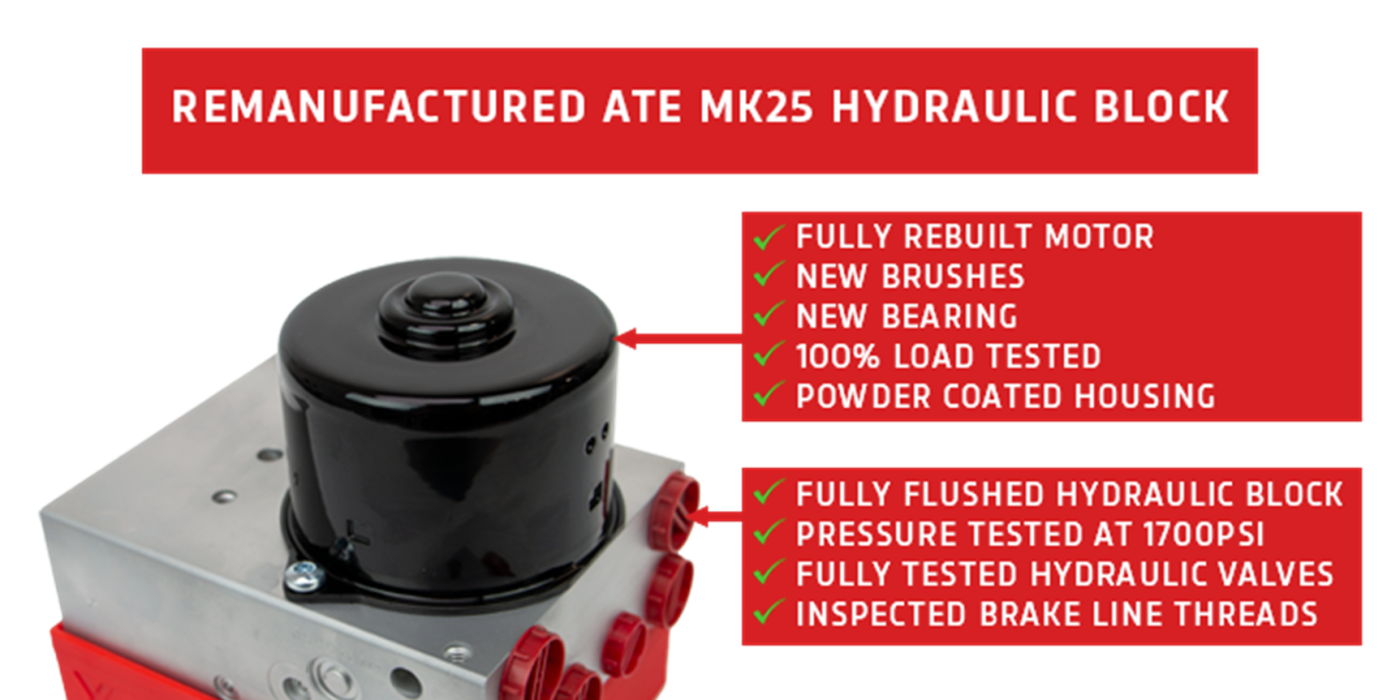
Each remanufactured unit undergoes a comprehensive process designed to address both mechanical wear and hydraulic integrity. The pump portion is fully rebuilt, including a restored motor, new brushes, and a new bearing to ensure consistent performance. The pump housing is also powder-coated to improve durability and resistance to environmental exposure. On the hydraulic side, the block is thoroughly flushed to remove any internal contamination and is pressure tested at 1700 psi to verify proper operation under real-world conditions.
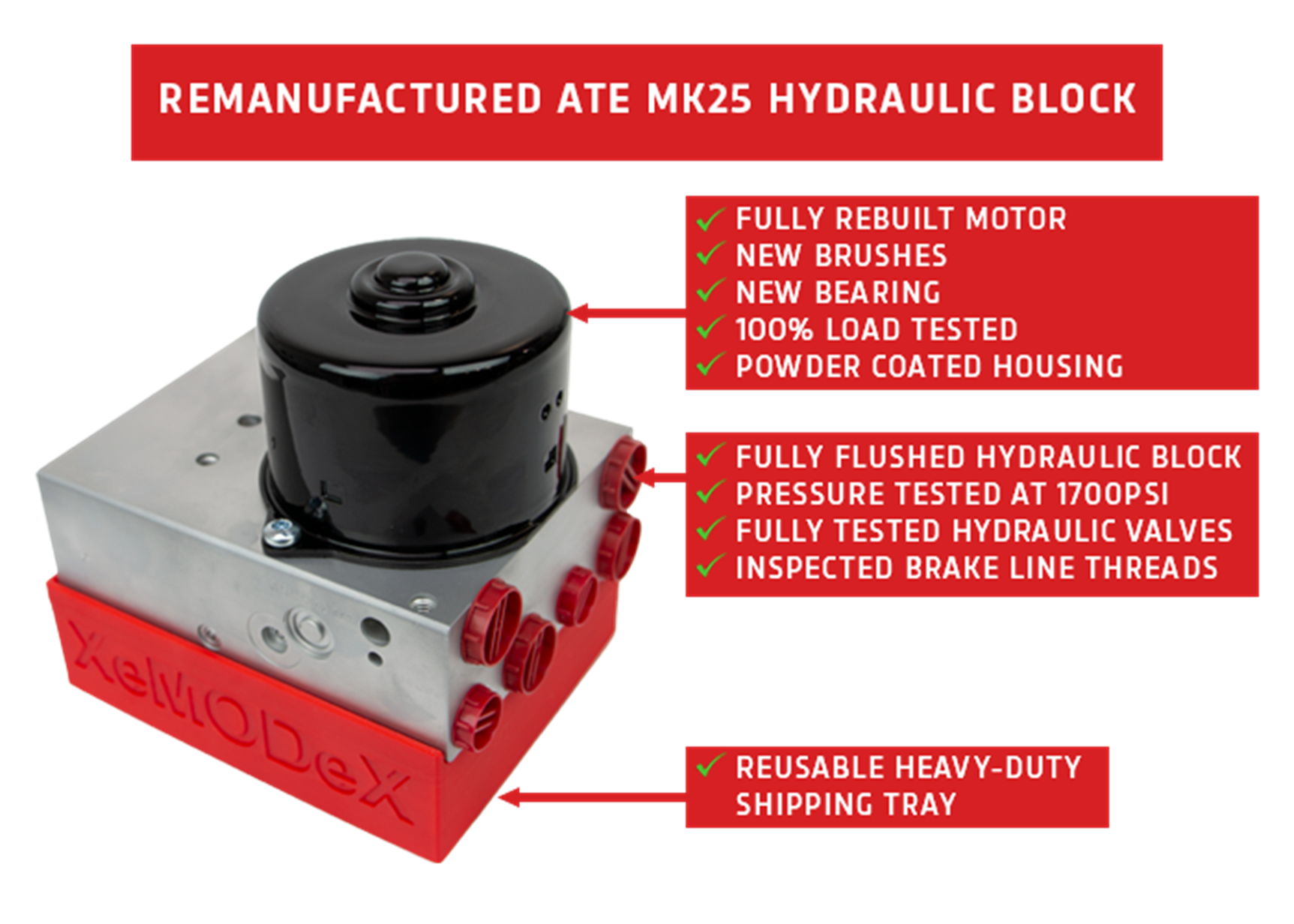
These processes are intended to provide a reliable alternative to full replacement while maintaining performance standards expected from the original equipment. As development continues, additional applications will be added to the stock exchange program, covering more makes and models across the market
This initiative reflects our consistent approach: identifying problems that lack practical solutions and addressing them directly. Rather than waiting for alternatives to emerge, XeMODeX continues to develop repair pathways that improve reliability, reduce costs, and extend the life of critical vehicle systems.
Visit www.xemodex.com to check out our products and services.