This is part of our blog series dedicated to providing information about how the electronics in your vehicle work. The goal is to help inform our customers so they can make the best possible decision for their vehicle.
What Is a Capacitor and What Happens When It Fails?
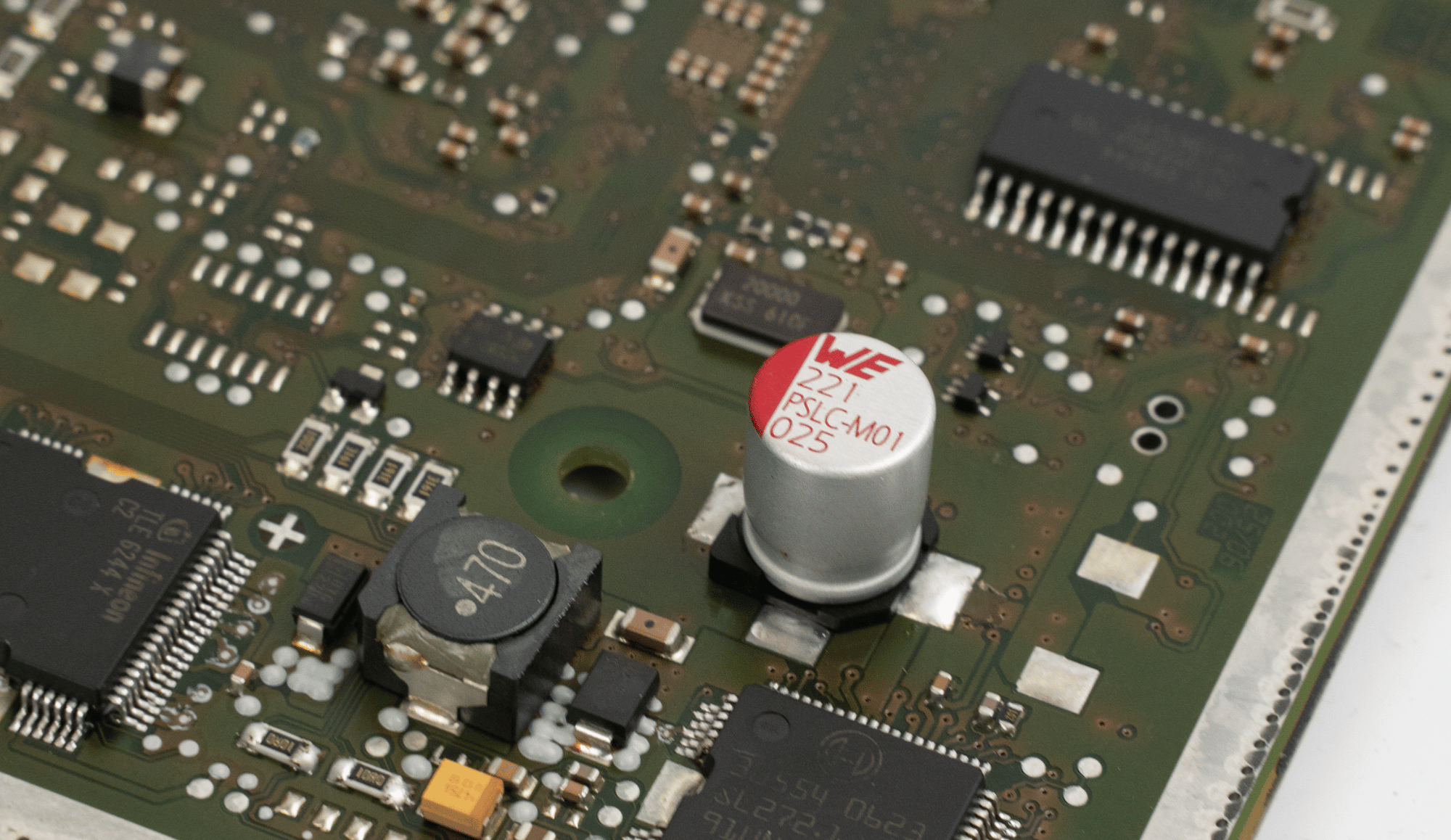
A capacitor is an electronic component that stores and releases electrical energy. It is one of the most common components found in electronic circuits, where it performs functions such as energy storage, voltage filtering, signal processing, and timing.
How Does a Capacitor Work?
A capacitor consists of two conductive plates separated by an insulating material called a dielectric.
When voltage is applied, electrical charge builds up on the plates, creating an electric field between them. The dielectric prevents current from flowing directly between the plates, allowing the capacitor to store energy.
When the circuit requires it, the capacitor releases this stored energy back into the circuit.
The amount of energy a capacitor can store is called its capacitance, which is measured in farads (F). Capacitance depends on the size of the plates, the distance between them, and the type of dielectric material used.
Why Are Capacitors Used?
Capacitors perform several important functions in electronic circuits.
Energy Storage and Voltage Stabilization
- Capacitors provide short bursts of power when needed and help maintain a stable voltage supply.
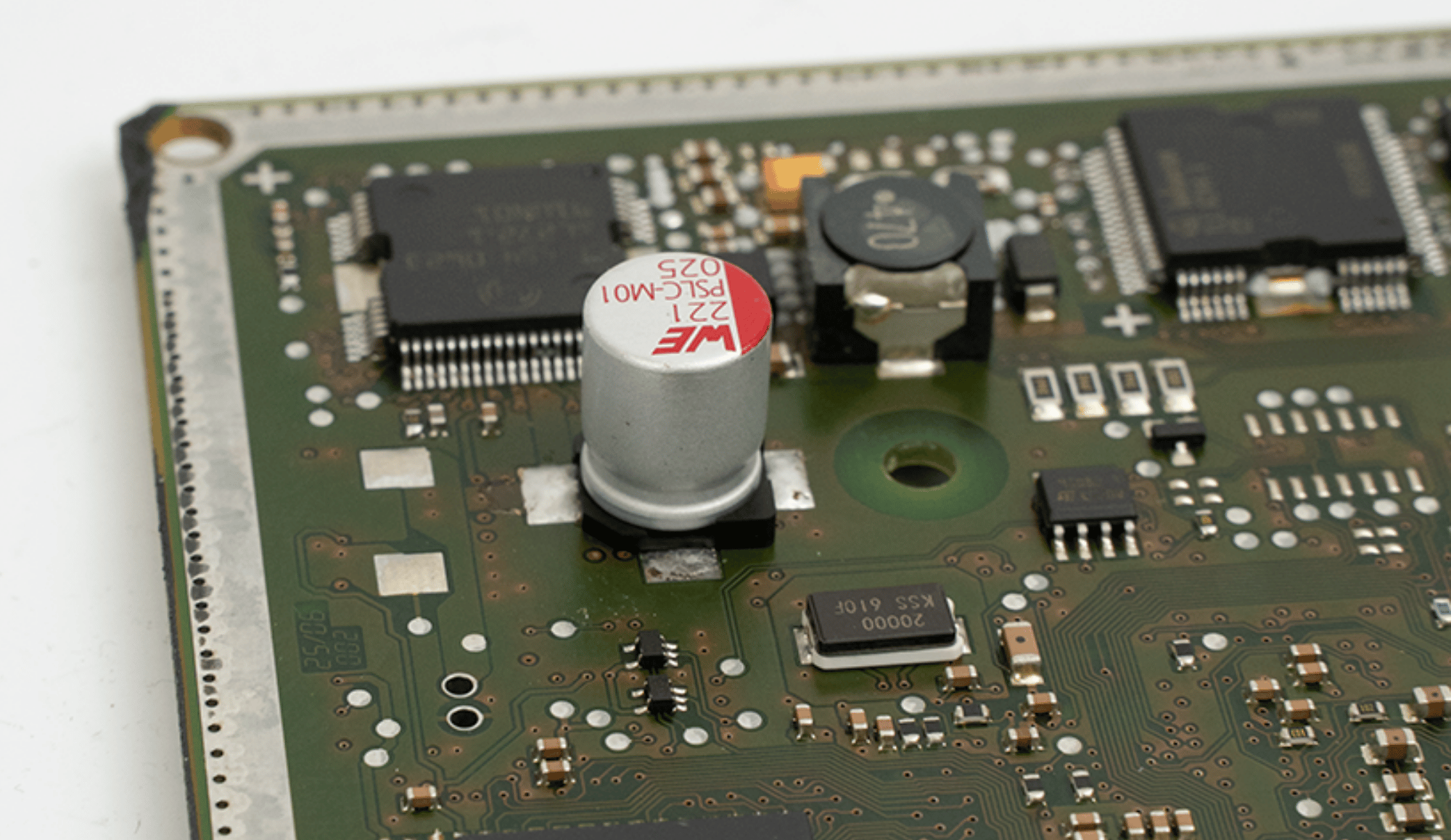
- In automotive electronics, they help electronic control units (ECUs) continue operating during brief voltage fluctuations and protect sensitive circuits from power interruptions.
Filtering and Noise Reduction
- Capacitors smooth voltage fluctuations and filter unwanted electrical noise.
- In vehicles, they help eliminate voltage ripple from the charging system and reduce electromagnetic interference (EMI) generated by components such as the alternator and ignition system.
Signal Processing
- Capacitors allow alternating current (AC) signals to pass while blocking direct current (DC).
- This makes them essential in audio systems, communication circuits, radios, and many other electronic applications.
Timing Circuits
- When combined with resistors, capacitors create precise time delays used in countless electronic circuits.
- Automotive applications include intermittent windshield wipers, turn signals, timing relays, and the clock circuits used by microprocessors.
What Happens When a Capacitor Fails?
Not all failed capacitors show visible damage. A capacitor can appear perfectly normal while no longer functioning correctly. Some of the most common failure modes include:
Increased ESR (Equivalent Series Resistance)
As capacitors age, their internal resistance can increase, reducing their ability to supply current efficiently. Symptoms may include:
- Power supply instability
- Intermittent module operation
- Random module resets
- Increased electrical noise
- Excessive voltage ripple
- Failures that occur only when the module is hot or cold
Loss of Capacitance
Over time, a capacitor’s ability to store energy can decrease. Symptoms may include:
- Slow startup
- Poor voltage filtering
- Timing circuits operating incorrectly
- Unstable voltage regulators
Leakage Current
If the dielectric begins to break down, current can leak through the capacitor. Symptoms may include:
- Excessive current draw
- Incorrect operating voltages
- Battery drain
- Overheating nearby components
Short Circuit
Although less common, a capacitor can fail as a short circuit. Possible symptoms include:
- Blown fuses
- Power supply shutdown
- Burned circuit board traces
- Overheated components
Open Circuit
A capacitor can also fail open, effectively disconnecting itself from the circuit. Symptoms may include:
- Excessive voltage ripple
- Communication errors
- Erratic sensor readings
- Loss of proper filtering
Symptoms of a Failing Capacitor in an Automotive Module
A failing capacitor often causes intermittent problems, making diagnosis difficult. The module may function normally most of the time before acting up under certain conditions. Common symptoms include:
- Module only works after warming up
- Random communication failures
- CAN bus errors
- Intermittent warning lights
- Random resets
- Failures under heavy electrical load
- Problems that develop after several minutes of operation
It is important to remember that these symptoms are not unique to a failing capacitor. Many different component failures can produce nearly identical behavior.
Accurately diagnosing an automotive electronic module requires the proper equipment and experience to identify the true root cause. Replacing parts based on symptoms alone can be costly and often fails to solve the problem.
At XeMODeX, every module is thoroughly diagnosed before repair to ensure the actual fault is identified and corrected, not just the symptoms.
Visit www.xemodex.com to learn more about our repair services and browse our complete range of automotive electronic module repairs.