This is part of our series of blog posts designed to help customers understand their vehicle better. Please keep in mind these are general descriptions of how these modules function. There are differences in many years and models, but generally the principles remain the same.
Common Symptoms of a Faulty Body Control Module (BCM): What Drivers Need to Know
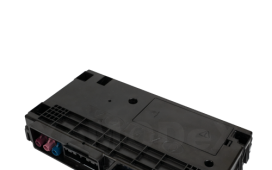
Electrical issues can be some of the most frustrating problems a vehicle owner will ever face. Random warning lights, dead accessories, and mystery battery drains can leave you guessing, and spending money on parts you might not need. One of the most common sources of these headaches is a failing Body Control Module, or BCM.
As mentioned in a previous blog post, the BCM can go by many different names depending on the manufacturer, but for this post we’ll stick to calling it the BCM.
Because the BCM controls so many of the vehicle’s convenience and safety systems, diagnosing it can be tricky. In this post, we’ll break down the most common symptoms of a faulty Body Control Module, the diagnostic trouble codes (DTCs) you might see, and why BCM problems can cause such widespread electrical chaos.

What Does a Failing BCM Look Like?
A faulty BCM can affect different parts of the vehicle at different times. Some symptoms show up all at once, while others appear intermittently, making the issue even harder to track.
Below are the most common signs drivers and technicians encounter. Keep in mind that the presence of these symptoms does not automatically mean there’s a problem in the BCM. Thorough diagnostics is always recommended.
- Electrical Accessories That Stop Working
One of the biggest giveaways of BCM trouble is when multiple electrical features fail simultaneously or behave erratically.
Common symptoms include:
- Power windows not responding
- Power door locks not functioning (or locking/unlocking on their own)
- Exterior or interior lights not turning on, staying stuck on, or flickering
- Rear defroster not activating
- Mirrors, seats, or sunroof acting intermittently
- Wipers Turning On by Themselves or Not Working at All
Wiper systems are commonly routed through the BCM for timing, speed control, and washer activation. BCM failure can cause:
- Wipers stuck on one speed
- Wipers turning on without input
- Wipers not activating when switched on
- Washer pumps running constantly or not at all
- Security and Immobilizer Problems
Because BCMs handle keyless entry, alarm functions, and security data, a fault can trigger immobilizer issues. Typical symptoms include:
- Vehicle won’t crank
- “Key Not Detected” messages
- Random alarm activation
- Security light flashing or staying on
- Battery Drain and Parasitic Draw
One of the most common nighttime headaches caused by a faulty BCM is unexpected battery drain. Internal faults can cause the BCM to keep circuits awake that should be asleep. Common signs include:
- Dead battery after sitting overnight
- Dome or courtesy lights staying on
- BCM not entering sleep mode
- Radiator fan running with the ignition off
- Fuel pump cycling intermittently
- Intermittent or Complete Communication Failure
Modern vehicles rely on CAN bus or LIN bus networks for module communication. If the BCM fails internally, it may drop off the network entirely. Symptoms include:
- No communication with BCM via scan tool
- Multiple modules reporting communication DTCs
- Random warning lights (ABS, traction control, airbag, etc.)
- Vehicle stuck in limp mode
- Random or Inaccurate Instrument Cluster Behavior
Because the BCM sends key signals to the instrument cluster, you may see:
- Warning lights illuminating randomly
- Gauges fluctuating without cause
- “Service Theft System,” “Service Electrical System,” or similar messages
Common BCM-Related DTCs (Diagnostic Trouble Codes)
While codes vary between manufacturers, several categories commonly point toward BCM issues:
U-Codes (Communication Faults)
These are the strongest indicators of BCM failure. Examples include:
- U0100 – Lost Communication with the ECM/PCM
- U0140 – Lost Communication with the BCM
- U0121 – Lost Communication with the ABS Module
- U0415 – Invalid Data Received from the ABS Module
When multiple modules show communication codes, the BCM is often the root cause, particularly if the communication problems involve more than one network.
B-Codes (Body-Related Electrical Faults)
These codes show up when body functions fail:
- B1000/B1001 – BCM Internal Fault
- B1322 – Door Lock Circuit Failure
- B2575 – Headlamp Control Circuit
- B3102 – Keyless Entry Antenna Error
A pattern of unrelated B-codes is a classic BCM red flag.
Common Causes of BCM Failure
To help drivers search and self-diagnose, here are the most frequent failure reasons:
- Water intrusion (the number-one BCM killer)
- Corroded or burned connectors
- Failed internal relays
- Overheated circuit boards
- Vibration-related solder cracks
- Shorted wiring harnesses sending voltage spikes
BCMs in high-humidity regions or vehicles with windshield leaks are especially vulnerable.
Can a BCM Be Repaired?
Yes. Many BCMs can be successfully repaired, but since they’re so complex, experience is vital. At XeMODeX, we use our experience and expertise to build custom-built test benches and repair processes unique to each module type.
To date, we have successfully repaired thousands of Body Control Modules. If your BCM isn’t listed on our website, you can submit a Custom Request, and our team will see if we can help.
The Bottom Line
A failing Body Control Module can mimic dozens of separate electrical issues. If you’re experiencing multiple electrical symptoms at once, especially combined with communication DTCs, there’s a strong chance the BCM is involved. Understanding the warning signs can save you time, frustration, and unnecessary repair costs.
If you suspect your BCM, CEM, TIPM, or SJB is failing, XeMODeX is here to help with professional diagnostics and long-lasting electronic module repairs.
Visit www.xemodex.com to check out our products and services.